
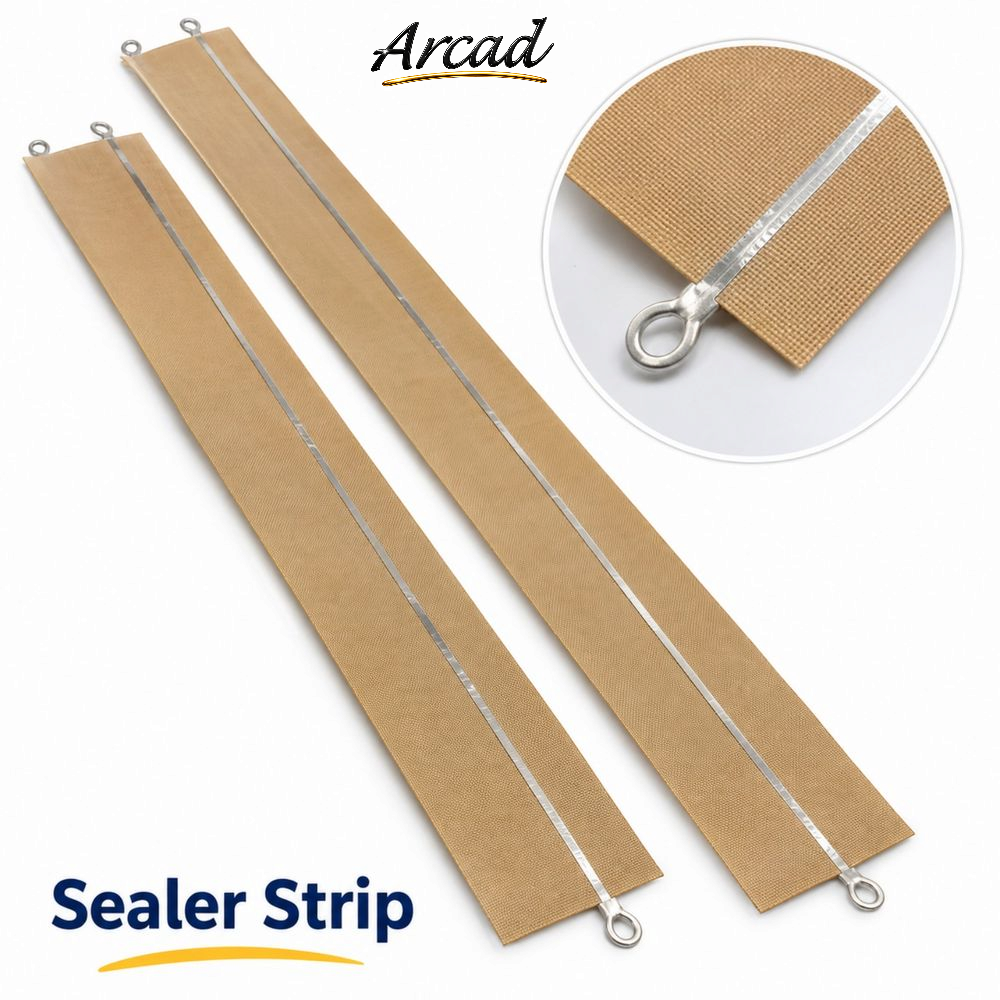
A worn sealing strip can interrupt an entire packing run. If bag film sticks to the jaw or the seam opens in the same spot, inspect the sealing surface before changing the film or replacing the machine. This heat sealer strip pairs a replacement heating wire with eyelet terminals and a non-stick PTFE cover. Matching the part to the original gives you a starting point for restoring an even seal on a compatible impulse machine.
On this page
Heat sealer strip sizes
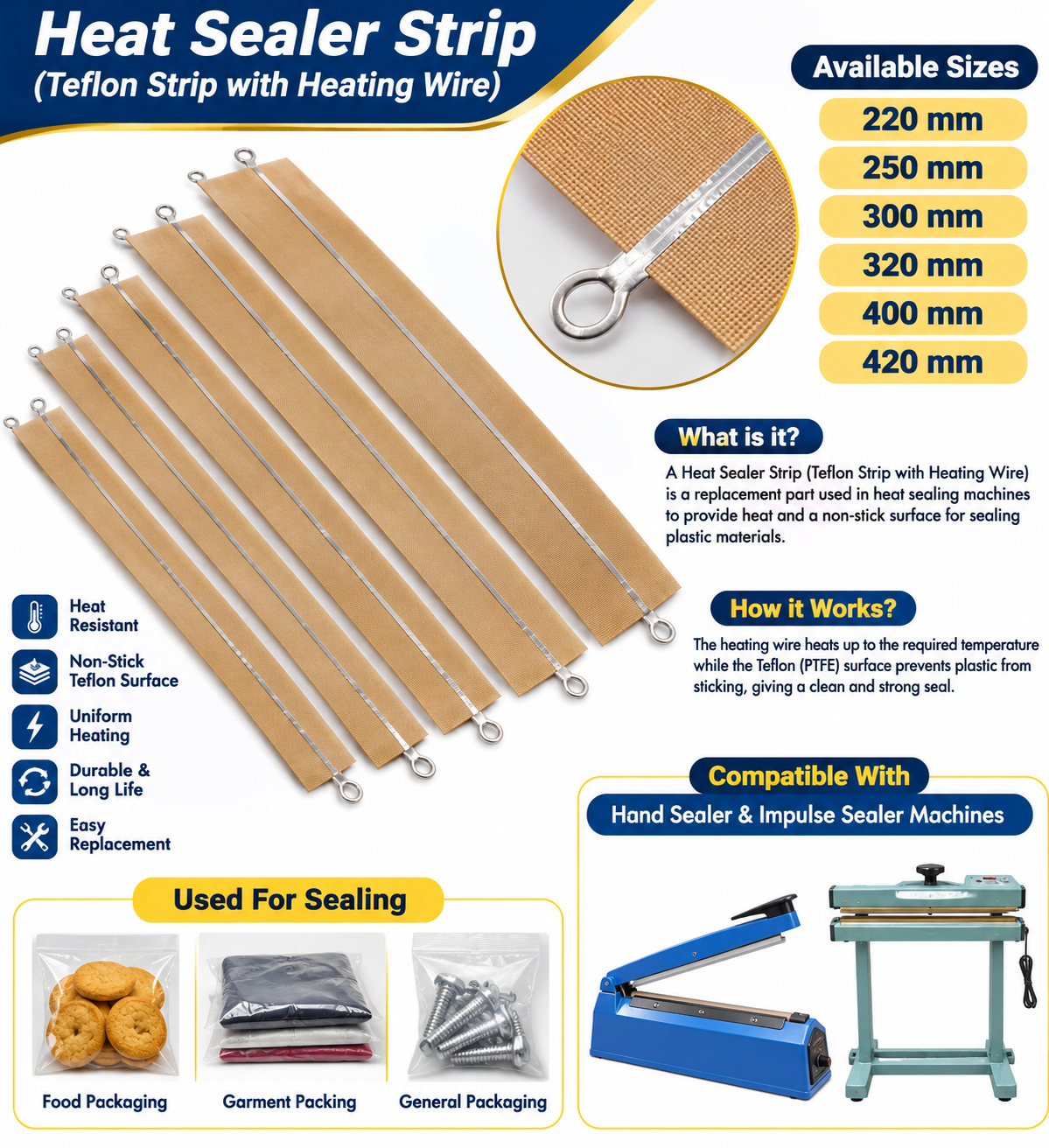
ARCAD offers six strip lengths. Use the machine model and the original element measurements together when choosing a replacement.
| Available lengths | 220 mm, 250 mm, 300 mm, 320 mm, 400 mm and 420 mm |
|---|---|
| Heating element | Metal heating wire with eyelet ends |
| Cover | Non-stick PTFE strip |
| Machine type | Compatible hand and impulse sealers, subject to fit |
How to match the strip to your machine
Check the brand and model from the machine label. Compare the old wire’s length, width and terminal-to-terminal distance against the replacement. Take a photo of both mounting points and note how the PTFE cover is held in place. Similar-looking sealing jaws can use different elements, even when the machines have the same advertised sealing length. A model number or clear photo of the old part is usually more useful than a measurement of the outer jaw alone.
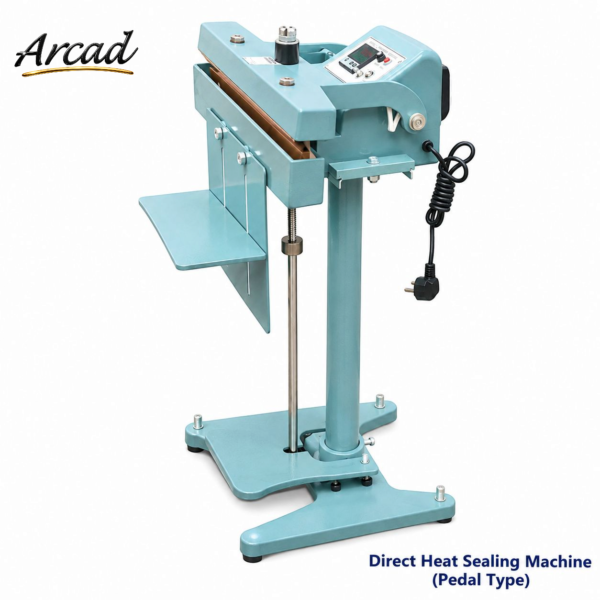
For example, if you are deciding between 300 mm and 320 mm, compare the original part and terminal spacing before choosing. If the old wire has broken or changed shape, use the manufacturer’s parts information and take clear photos of the machine label and both mounting points. You can also view the ARCAD FS Series impulse sealers to identify the machine style before sending your details.
What the heating wire and PTFE cover do
In an impulse sealer, a short pulse heats the element while the jaws press the bag layers together. The PTFE cover helps keep the heated film from sticking to the element. The cover and the insulation under the element serve different functions. Check both areas and consult the machine manual for the correct parts. This impulse-sealer maintenance reference explains the difference between the PTFE cover and the lower insulating layer.
Common applications include compatible heat-sealable bags for garments, hardware packs and dry goods. The bag material and thickness determine the sealing settings. For food packaging, use bags specified by the supplier for the intended food. When you switch to a different film, check a sample seam and watch for gaps, wrinkles or sticking before packing the rest of the batch.
When to check or replace the strip
Signs to inspect include a torn or burnt cover, a visibly broken element, or a seam that opens repeatedly at the same point. Film residue, unsuitable settings and uneven pressure can also affect the seam. Use the machine’s troubleshooting guidance to identify the cause before ordering a replacement. If different settings produce the same defect in the same spot, point that out when asking for help identifying the part.
Switch the sealer off, disconnect the power and allow it to cool before inspection. Follow the machine manufacturer’s service instructions or have a technician fit the part if access to electrical components is required. Once reassembled, test with an empty bag of the same film and inspect the cooled seam for consistent closure.
For a heat sealer strip in Dubai, contact ARCAD Hardware with your sealer model, old strip measurements and terminal photos. Mention whether the machine is a tabletop hand sealer or a foot-operated impulse model, and include the quantity of spare strips you need.

Reviews
There are no reviews yet.